
By the beginning of the 18th century BCE, Yasmaḫ-Addû’s father, Šamši-Addû, had built an empire: The Upper-Mesopotamian empire, to be precise. Famously and throughout history, living in your great father’s shadow is never an easy life. Much harder even when your perfect older brother Išme-Dagan is placed in your family’s ancestral throne of Ekallatum living up to your father’s expectations while you, placed on the throne of the conquered Mari, would much rather hang with your harem and investigate ancient Sumerian artifacts your army looted.
The correspondence between Yasmaḫ-Addû and Šamši-Addû is a notorious one. Their letters include some of the most quoted Akkadian passages to this day. After all, the role of a father angry with his “lazy” son is one known to kings, Assyriologists, and possibly every other human, and the reassurance that parenting has always been difficult is quite refreshing. Beyond the famous quotes, however, lies an extensive corpus of socio-linguistic treasures; a few highlights from which I will share here.
Learning Amorite
Beginning with my personal highlight, the following two letters deal with Šamši-Addû’s upset with Yasmaḫ-Addû over speaking very bad to no Amorite, at all, despite it being the family’s heritage language. Following Ziegler & Charpin (2007), Yasmaḫ-Addû and his brother were likely educated in Akkadian for prestige reasons, instead of their father’s native Amorite. But as it often happens in these cases, Šamši-Addû, perhaps regretful later, still wanted his sons to speak their heritage language, not least due to its importance in communicating the the nomandic peoples living on their lands.
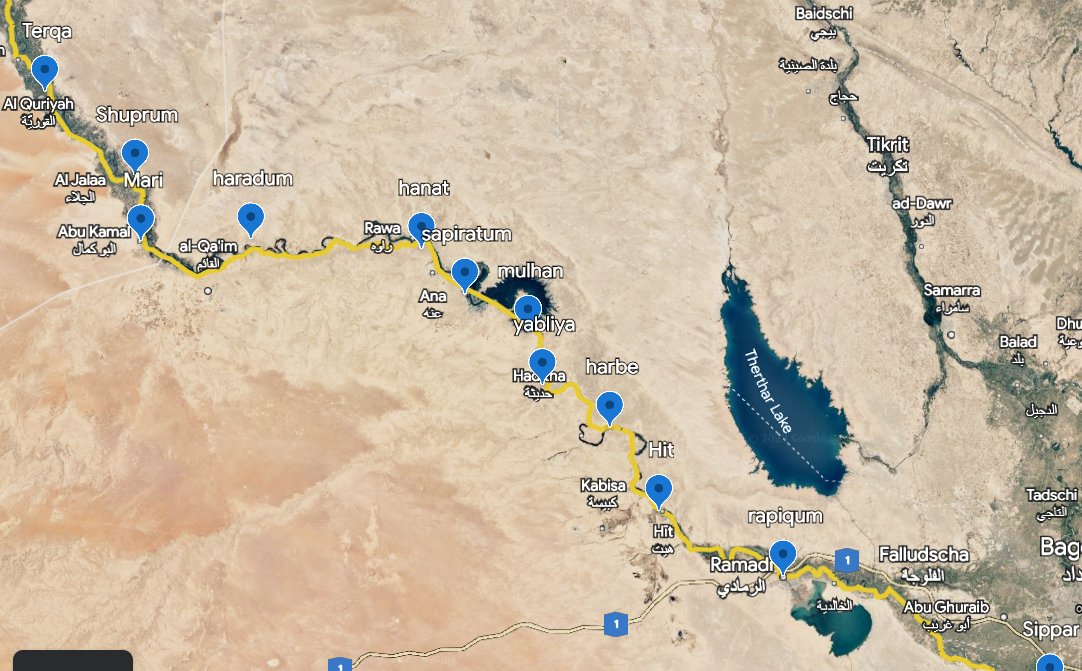
Šamši-Addû’s main adversary/frenemy of the time was the legendary Ḫammurabi who himself was on a conquest for Babylonia. The Upper-Mesopotamian and Babylonian border laid somewhere beyond the city of Rāpiqum (see map below) at the time when a new border dispute erupted between the two superpowers. With Yasmaḫ-Addû closest to the border, he would have ideally gone to negotiate, however, as noted by his father, his linguistic skills were just not good enough to communicate with the local nomadic Amorite-speaking peoples.
The dispute ended with Ḫit going to Ḫammurabi and Ḫarbe staying Upper Mesopotamian territory. The area around Rāpiqum was inhabited by big numbers of nomadic Amorite peoples who needed to be evacuated following Ḫammurabi gaining control over their territory.
In this context, we find ourselves back with Yasmaḫ-Addû and Šamši-Addû who now had to deal with a very severe refugee crisis. Well, that is Šamši-Addû had to deal with it. Yasmaḫ-Addû? He had more important things to do. For instance, looking for someone to translate all the cool booty they got from the refugees.
While Šamši-Addû was busy doing his son’s work, Yasmaḫ-Addû piled onto his father’s workload, asking for a man who knew Sumerian to translate his new loots.
M.7930+M.8157
| Transkription | Translation | |
|---|---|---|
| [a-na] ia-á[s-ma-aḫ-dim | To Yasmaḫ-Addû | |
| [qí]-bí-[m]a | Speak! | |
| [um]-ma dutu–[ši-dim a-bu-ka-a-ma] | Thus (speaks): Šamši-Addû, your father. | |
| [aš-šum 1 lú] ša šu-me-ra-[am ḫi-ṭú] | About a man who knows Sumerian | |
| 5 | [a-na ṣ]e-ri-ka ṭà-ra-di-[im ta-aš-pu-ra-am] | You have written me, (asking) to send him to you. |
| [m]a-a ki lú ša šu-me-ri-i[m ḫa-ṭi-im e-re-ši-im] | What!? Instead of asking for a man who knows Sumerian, | |
| a-mu-ur-re-em da-ba-b[a-am at-ta-ma] | You learn how to speak Amorrite! | |
| a-ḫu-uz ma-an-nu-[um an-nu-um] | Who is the man9 that I have | |
| lú ša šu-me-ra-am ḫi-ṭú-ma [ma-aḫ-ri-ya] | Who speaks Sumerian (and who) in my (service) | |
| 10 | wa-aš-bu an- na šu-é-a ša šu-m[e-ra-am ḫi-ṭú] | Dwells? Certainly, Šu-Ea who knows Sumerian. |
| a-ṭà-ra-da-ku-ú-um šu-é-a ù […] | Will I send you Šu-Ea? … | |
| Idiškur-zi-kalam-ma šu-me-ra-a[m ḫi-iṭ] | Iškur-zi-kalamma knows Sumerian, | |
| ù [a-n]a te-er-tim ša-ki-[in] | But he has an administration office (to attend to). | |
| li-zi-ib-ma-a te-er-ta-[šu] | Should he leave his office | |
| 15 | ù a-na ṣe-ri-ka li-i[l-li-ik] | And go to you? |
| Idnanna-igi.du šu-me-ra-am [ḫi-iṭ] | Nanna-palil knows Sumerian. | |
| ù a-na qa-ab-ra-aki la-aš-[šu] | But due to Qabrā, he is not present. | |
| ki-a-am ta-aš-pu-ra-am um-ma a[t]-ta-a-[ma be-li] | So you have written me thus: ‘You, my lord, | |
| 1 lú ra-pí-qé-emki ša šu-me-ra-am ḫi-ṭú | One man from Rāpiqum who knows Sumerian | |
| 20 | a-na ṣe-ri-ia | To me |
| li-iṭ-ru-da-aš-šu | May you send him.’ | |
| ma-am-ma-an ša šu-me-ra-am ḫi-[ṭú] | Someone who knows Sumerian | |
| an-ni-ki-a-am i-na l[ú-meš ra-pí-qí-imki] | Here among the men in Rāpiqum | |
| ú-ul i-ba-aš-ši a x x […] | Does not exist … | |
| 25 | [x] ù am-m[ì-nim …] | … And why … |
| [l]ú-meš su-ḫa-a-y[u … ki-ma] | Suḫaeans … as per | |
| ša ta-aš-pu-r[a-am …] | What you wrote … | |
| i-ka-aš-ša-dam aš-šum […] | It will arrive because … | |
| a-na su-ḫaki ṭà-ra-di-[im ta-aš-pu-ra-am] | You have written me about the expulsion of Suḫum | |
| 30 | i-na-an-na la-e-em ṭú-[ru-ud …] | Now, send Laʾûm and … |
| i-na li-ib-bi-šu-nu x […] | Within them … |
The letter we have just read is Šamši-Addû’s reply to Yasmaḫ-Addû’s request for a Sumerian speaker. He is obviously very angered at the unnecessary request: “Instead of asking for a man who knows Sumerian, (how about) you learn to speak Amorite?!” BTW: He probably ended up sending Šu-Ea to his son, despite his changrin with the unnecessary request.
Let us look at another letter on the matter. This time, it is a letter written by Yasmaḫ-Addû, which was, however, never sent. Why? We are not sure.
The Amorite refugee crisis became an increasingly bigger problem. Managing masses of people was never an easy task, but managing nomads who spoke a language one did not speak oneself? BIG problem. And if that language turned out to be one’s heritage language … that makes it an embarrasing problem. Šamši-Addû micromanaged Yasmaḫ-Addû throughout this crisis, too, giving him strict instructions on how to deal with the Suḫaeans (the nomadic tribe). Yasmaḫ-Addû was having none of it at first (re: his request for a Sumerian scribe), but finally had to cave in & take care of the nomads outside of Mari.
Since he already had to tend to this annoying problem, Yasmaḫ-Addû thought he might as well do it as the king that he was and approach the nomads himself. His father, however, instructed him not to do thus, further hurting his son’s ego. In a previous letter, presumably the letter Yasmaḫ-Addû answered here, Šamši-Addû wrote “You are incompetent!” and “Do not go on your own!” The hurt and embarrasment is well discernible in Yasmaḫ-Addû’s tone here. “Without exaggeration, I WILL learn Amorite!” It reads similarly to a teenager running upstairs and slamming the door behind them shut.
A.3823
| (…) | ||
| ku-uš-dam pa-ni-ia [a-na ub-bu-bi-im] | “… arrive!” For the counting | |
| aš-ku-un-ma ṭup-pí be-lí-ia ik-šu-[dam um-ma-mi] | I have prepared when the tablet of my lord arrived saying: | |
| la ta-ḫa-am-mu-uṭ-ma ha-na-[meš] | “Do not hasten! The Ḫana | |
| 5’ | la tu-ub-ba-ab šum-ma ia-ri-im-[dim] | “Do not count! If Yarim-Addû |
| qé-er-bé-ek-kum a-na a-limki al-k[a-ni]m-ma | “Is near you, go to the city and | |
| lu-wa-e-er-ka-ma at-la-ak | “I may instruct you and (then) you will go. | |
| šum-ma la ke-em-m[a i]a-ri-im-dim | “If it is not thus and Yarim-Addû | |
| ú-ul qé-er-bé-ek-kum a-na šu-ba-at-den-lílki | “Is not near you, to Šubat-Enlil | |
| 10’ | a-na pa-ni-ia al-kam an-ni-tam be-lí | “To me, come!” This my lord |
| iš-pu-ra-am-ma at-ta-ak-la | Has written to me and I have stayed. | |
| [iti x x x x x u4 (?)] 6(+n)-kam [b]a-zal-ma | [In the month …], during the 6+ day … | |
| [x x x x x x x x x x] x | […] | |
| Break | ||
| Rev. | ú-ul [x x x x (x)] x x [x x x x …] | […] not […] |
| i-na ša-[la-ša-at u4]-mi a-na ub-bu-[bi-im] | In three days, the counting | |
| qa-ti a-ša-ak-ka-an | I will tackle. | |
| ú-ub-ba-ab-šu-nu-ti-ma a-na ṣe-er be-lí-ia | I will count them and to my lord | |
| 5’’ | a-al-la-kam ù be-lí ke-em iš-pu-ra-am um-ma-mi | I will go. Also, my lord has written me thus: |
| a-mu-ur-re-e it-ti-šu-nu da-ba-ba-am | “To speak Amorite with them | |
| ú-ul te-le-i at-ta la ta-al-la-ak | “You are not very competent! Do not go (yourself)! | |
| la-e-em mu-ut-bi-si-ir ù ma-šum | “Lāʾûm, Mut-Bisir and Māšum | |
| ṭú-ru-ud-ma li-ib-bi-bu-šu-nu-ti | “Send (so) they may count them!” | |
| 10’’ | [a-m]u-ur-re da-ba-ba-am la wa-ta-ar a-aḫ–ḫa-az | Without exaggeration, I will learn speaking Amorite! |
| [ x x x i-na ta]–ši-ma-ti-ia a-mu-ur-re-e | In my opinion, Amorite […] | |
| [x x x x x x x (x)] wu-di ki-ma 1–šu 2–š[u] | […] certainly one time or two times […] | |
| [… x x] | […] | |
| Break | ||
| Edge | […]-nu | |
| […]-meš | ||
| […]-ti | ||
| wa-ar-ki ṭup-pí-ia an-ni-im š[a-la-ša-at] | [Three] days5’’’ after this tablet | |
| 5’’’ | u4-mi ḫa-na-meš ú-ub-ba-{x}-[ab] | I will count the Ḫana. |
These exchanges pose extraordinary documents to attitudes on multi-lingualism, especially in multi-cultural contexts involving languages of differing social prestiges in the Ancient Near East. They are among my absolute favourites. Yasmaḫ-Addû and Šamši-Addû’s exchanges were typically of consistent nature, and Šamši-Addû’s numerous comments on his sons incompetence have left us with valuable insights in other sociological norms of the time. Let’s look at a letter, which contains one of the most famous lines in ANE popular culture.
“Are you a baby? Have you no hair on your chin?”
Šamši-Addû’s road to power had been anything but easy and was in fact a rather bellicose affair. After fleeing his native Ekallatum following an Elamite attach, he managed to unite the Upper Mesopotamian territories through a series of successful conquests.
Mari, Assyria, and Andariq all fell under his rule eventually. Keeping the kingdom intact, however, was not an easy task and required the help of his loyal children. His eldest son, Išme-Dagan, Šamši-Addû placed on the throne of Ekallatum, which had once been promised to him, and which he had to reconquer following his exile. Išme-Dagan indeed turned out to be a worthy king, smart, a strong warrior, and reliable.
His youngest son, Yasmaḫ-Addû, Šamši-Addû placed on the throne of Mari, a stronghold of great importance as the kingdom of Mari covered some of the most travelled and important trade routes of the region. It appears, however, that Yasmaḫ-Addû was not quite up to the task. Dozens of letters attest to Šamši-Addû’s great dissatisfaction. From rants about his son’s incompetence to comparisons to his perfect brother to micro-managing step-by-step instructions on how to handle basic tasks: we have it all on clay.
Reading the letters in chronology, it is not uncommon to find one letter by Šamši-Addû instructing Yasmaḫ-Addû on a task and the very next letter then reading: “Nevermind, I already did it myself.”

So let us look at an example of the kings’ interactions. Here is ARM 1 73, sent by Šamši-Addû to his incompetent son (skip to lines 42 onwards for the scolding):
ARM 1 73
| Front | a-na ia-ás-ma-ah-d[IŠKUR] | To Yasmaḫ-Addû |
| qí-b[í]-m[a] | Speak! | |
| um-ma dUTU-ši–d[IŠKUR] | (Thus) says Šamši-Addû | |
| a-[b]u-ka-a-[m]a | Your father: | |
| 5 | ṭu[p-p]a-ka ù ṭup-pa-am ša dEN.ZU-ti-ri | Your tablet and that of Sîn-têrî, |
| ú-[š]a-bi-la-kum tu-ša-bi-lam-ma eš-me | Which he has sent me, (and) which you have sent, I have heard | |
| aš-šum še-im ša ha-la-aṣ tu-ut-tu-ulki | About the grain from the Tuttul area, | |
| ša a-na we-du-ti-ka ta-at-ta-ap-[pa-lu] | Of which you have, for your status as wêdûm, on several occasions, | |
| ta-aš-pu-ra-am | Made donations in payment: | |
| 10 | ha-al-ṣú-um šu-ú ú-ul ha-la-as-[s]ú | This area is not his (and) |
| še-um ša te-el-qú-ú ú-ul bi-la-ás*-[s]ú* | The grain that you took is not the one he was supposed to perceive. | |
| i-na MU 1.KAM KÙ.BABBAR 1 GÚ 2 GÚ KÙ.BABBAR ša i-ka-ṣa-⸢ru*⸣-ma* | In a year, in money, a talent or two, this is what he gathers and | |
| i-na MU.DU-šu ú-ṭà-ah-ha-am | Which he brings me when he contributes. | |
| a-ia-nu-um i-le-eq-qé-e-em | Where does he get it? | |
| ú-ul i-na še-im Ì ù GEŠ[TIN] | Is it not about grain, oil and wine? | |
| a-na KÙ.BABBAR it-ta-na-[d]i-in-ma | He multiplies the sales, | |
| KÙ.BABBAR ša-a-ti i-ka-ṣa-ra-am-ma ú-ṭ[à-ah-ha-am] | Collects this money and brings it to me. | |
| aš-šum ki-a-am ša-pa-ra-am an-né-em iš*-pu*-ur* | That’s why he sent this message. | |
| tu-ša hu-ur-ru-um ša KÙ.BAB[BAR] | It looks like a vein of money | |
| 20 | i-na ha-al-ṣí-šu i-ba-aš-ši-ma | Is in his area. |
| KÙ.BABBAR i*-le-qé-a-am-ma ub-ba-lam | He just has to take the money and bring it. | |
| ú-ul i-na še-im Ì ù GEŠTIN | Is it not from grain, oil and wine | |
| KÙ.BABBAR ša-a-ti i-ka-ṣa-ra-am-ma ub-ba-lam | That he gathers this money to bring it to me? | |
| i-na-an-na du-up-pí-ir ha-al-ṣa-am ša-a-t[i] | Now take that area | |
| i-na qa-ti-šu* | Off his hand. | |
| Edge | [i]š-tu […] | Once… |
| [z]a-a[l-…] | … | |
| ù […] | ||
| Reverse | […] | |
| 30 | […] | |
| uš-[…] | ||
| x […] | ||
| l[i-i]l-li-ik ù bi-l[a-ás-sú-nu] | Let him go… and their tax | |
| a[k]-ka-ši-im-ma [li-id-di-in] | Give to him. | |
| 35 | ù dEN.ZU-ti-ri ha-[la-as-sú li-wa]-e-er | Sîn-têrî must take care of its own area |
| ù at-ta i-na ha-a[l-ṣí-ka-ma] | And, yourself, in your own area, | |
| [aš-šum ŠE-im Ì ù GEŠTIN ša a-na KÙ.BABBAR] | Regarding the grain, the oil and the silver | |
| [a-na na]-da-nim i-n[a-an-na] | That are for sale, now | |
| š[a e]-li-ka ṭà-bu [e-pu-úš] | Do what you see fit. | |
| 40 | ù an-né-e-tim dEN.[ZU-ti-ri li-di-ma-ma] | Sîn-têrî must understand this and |
| li-ib-ba-ka la i*-ša*-[ap-pí-il] | You must stop being depressed. | |
| ù k[a]-ti ad-ma-ti [ni-it-ta-na-ar]-r[i-k]a | Hey you! How long will we have to direct you on all occasions! | |
| ṣé-eh-re-e-et* [ú-ul e]ṭ-le-e-et* | Are you a baby? Aren’t you an adult? | |
| ú-ul ša-ar-tum i-n[a l]e-ti*-ka | Don’t you have any hair on your chin? | |
| 45 | ad-ma-ti É-ka la tu-wa-a-ar | When will you rule your House? |
| a-ha-ka-a ú-ul ta-na-aṭ-[ṭ]à-a[l] | Do you not have your brother before your eyes, | |
| ša um-m[a-n]a-tim ra-ap-ša-tim ú-wa-a*-[ru] | He who leads vast armies? | |
| ù [at]-ta é-kál-la-ka É-ka wu-e-[er] | So, you too, rule your palace, your house! | |
| ṭup-[pí] an-ni-a-am ta-ri-im-ša-ki-im | Tarîm-Šakim, this tablet from me | |
| 50 | ma-a[h-r]i-ka li-iš-me-[m]a | In your presence he must read it. |
| at-ta ù ta-ri-im-ša-ki-im | Talk together, you and Tarîm-Šakim. | |
| ši-ta-la-ma 1 LÚ ša-pí-ṭám | A single governor | |
| 1LÚ a-bu É ta-[ak-la-am] | and a single trusted steward | |
| š[a*][a-n]a* é*-[kál-lim] ta*-aṭ-ṭà-[ar-du] | Whom you will have sent to (take care of the) palace; | |
| 55 | i-na ha-al-ṣí-im š[a-a-ti ta-ša-ka-an] | In this area you will install. |
| Edge | ha-al-ṣa-am ša-a-ti li*-wa*-e*-r[u*-ma] | They must take charge of it and |
| ša pí-ka ù qa-bi-ka li-p[u-šu] | Do what you say and order. | |
| ù dEN.ZU-ti-ri a-na ha-a[l-ṣí-im ša-a-ti] | As for Sîn-têrî, this area | |
| [l]a i-ṭe₄-eh-he | He must no longer approach! |
The passage starting in l. 41 highlights a few linguistically as well as sociologically interesting passages. Šamši-Addû’s outbursts with Yasmaḫ-Addû are known to inlcude many colloquialims that we would otherwise have no access to. They also help us reconstruct contexts for the usage of certain grammatical forms, for instance here with the Stative (see Kamil, Forthcoming).
“You must stop being depressed. […] How long will we have to direct you on all occasions! Are you a baby? Aren’t you an adult? Don’t you have any hair on your chin? When will you rule your House? Do you not have your brother before your eyes, he who leads vast armies? So, you too, rule your palace, your house!”
Sociologically, it is interesting to observe the notions the speakers had about ‘manliness’, i.e., a concept linked to bellgerence, bravery, leadership and reliability, as well as apparently physical appearance (e.g., a beard on one’s chin).
More stories from Šamši-Addû and Yasmaḫ-Addû’s correspondence will be added here as I stumble upon them …
 Iris Tanza-Kamil